
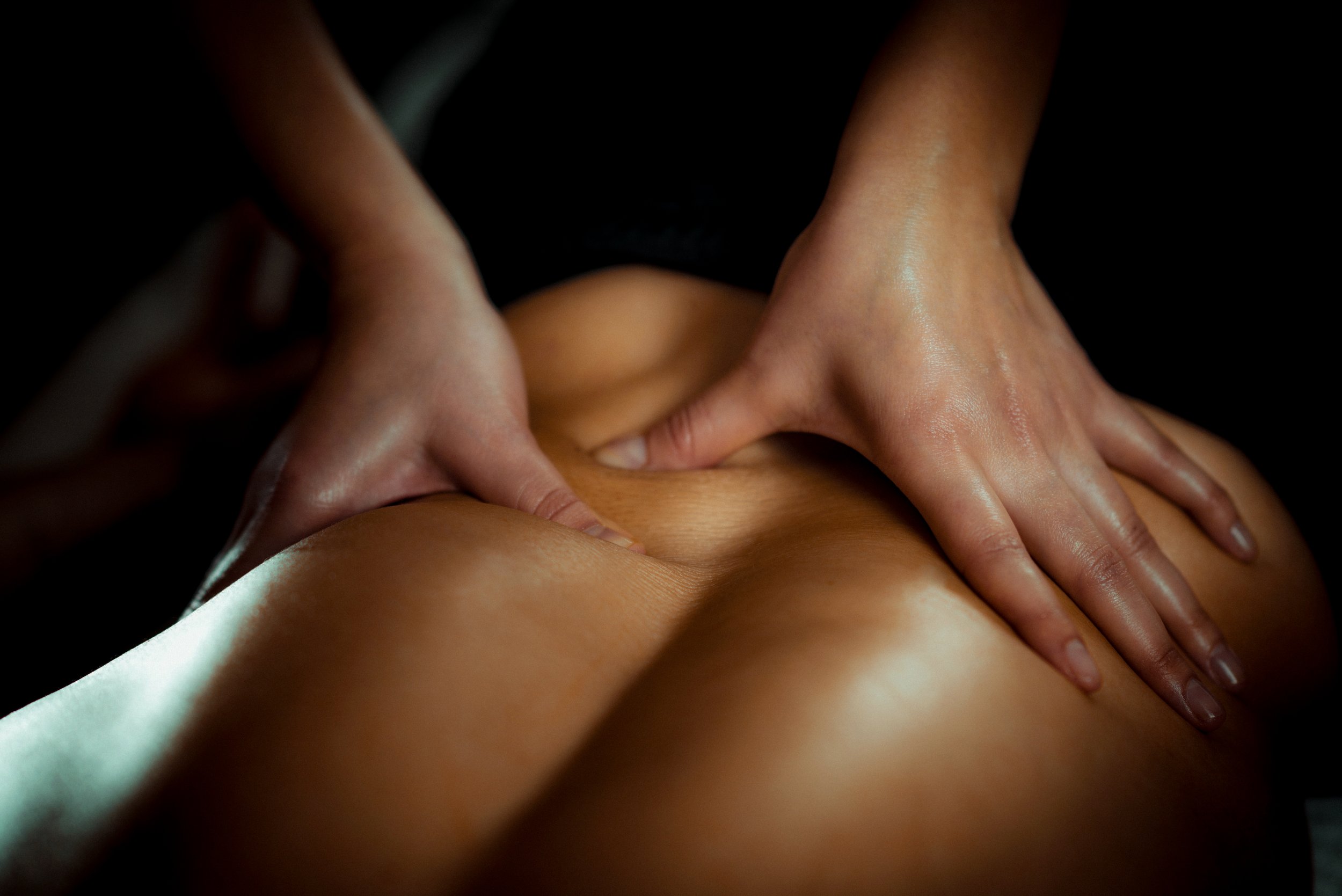
Relaxation massage therapy is the most widely booked massage service at Knead -- and the one most clients return to again and again once they experience what it actually does. A relaxation massage is not a luxury. It is a clinical intervention that measurably reduces stress hormones, activates the parasympathetic nervous system, improves circulation, and supports the kind of sleep quality that a busy Vancouver life often disrupts.
At Knead Foot & Body Massage, relaxation massage sessions are delivered by Registered Massage Therapists (RMTs) licensed under the BC College of Massage Therapists. This means your session is covered by most extended health benefit plans in BC -- a distinction that sets Knead apart from spa-based relaxation massage, which is not insurable. Sessions run from 25 to 120 minutes, direct billing is available for most extended health plans, and both our Marpole and Mount Pleasant studios are designed from the ground up for the kind of quiet, intentional environment that makes relaxation massage actually work.
What Is Relaxation Massage?
Relaxation massage -- also called Swedish massage -- is a full-body or targeted massage that uses slow, flowing strokes and gentle to moderate pressure to calm the nervous system, release surface-level muscle tension, and promote a deep state of physical and mental rest. It is the foundational modality of Western massage therapy, and the starting point from which deeper clinical work is built.
Unlike therapeutic massage approaches that target specific structural problems, relaxation massage prioritizes how you feel. The goal is to shift your body from a state of physical and mental alertness into a state of rest -- reducing the output of stress hormones, slowing heart rate and breathing, and permitting your muscles to let go of the tension they have been holding.
Relaxation Massage vs. Deep Tissue Massage -- Which One Do You Need?
The most common question new clients ask is whether they should book a relaxation or a deep tissue massage. Here is a direct answer.
Relaxation massage is the right choice when: you are stressed, you are not sleeping well, you have general tension without a specific injury, you have never had a massage before and want to start gently, or you want to feel better for an hour or two. It uses lighter pressure and does not target structural dysfunction.
Deep tissue massage is the right choice when you have chronic pain in a specific area, reduced range of motion, are recovering from an injury, or have specific muscle adhesions that need clinical attention. It applies sustained, targeted pressure to reach deeper tissue layers. Read our full deep tissue massage guide to understand which is right for your situation. Many Knead clients use both -- relaxation massage as a regular reset, and deep tissue when a specific issue needs focused attention.
Relaxation Massage vs. Sports Massage
Sports massage is structured around training cycles—pre-event preparation, post-workout recovery, and maintenance throughout a competitive season. It uses many of the same techniques as relaxation massage, but applies them with a different clinical intent. If you exercise regularly and want to support your body's recovery from physical training, sports massage is worth exploring. If your primary goal is stress reduction and general nervous system recovery, relaxation massage is the appropriate starting point.
What Happens During a Relaxation Massage?
If you have never had a massage before, or if it has been a long time, knowing what to expect makes the experience easier to settle into. Here is what a relaxation massage session at Knead looks like from start to finish.
The Techniques Used in Relaxation Massage
Relaxation massage draws primarily on two foundational stroke types:
Effleurage: long, gliding strokes applied with the full surface of the hand in the direction of blood flow toward the heart. This is the characteristic technique of Swedish massage -- slow, rhythmic, and covering broad areas of the body. Effleurage warms the tissue, increases surface circulation, and begins to calm the nervous system within minutes of application.
Petrissage: a kneading and lifting action applied to softer tissue areas like the shoulders, back, and thighs. Where effleurage works across the surface, petrissage works slightly deeper to release tension in the muscle belly and improve tissue mobility without the clinical depth of deep tissue work.
Your therapist may also use light tapotement (rhythmic percussion), gentle skin rolling, or passive stretching of specific joints, depending on what your body responds to during the session. All pressure is adjustable -- relaxation massage can be delivered at light, moderate, or firm pressure depending on your preference. The goal is never discomfort.
What the Session Feels Like -- From Start to Finish
You arrive and check in at one of Knead's studios—either Marpole on Granville Street or Mount Pleasant on East 15th Avenue. Both are designed to be quiet and low-stimulus from the moment you walk in. Your RMT will ask a few brief intake questions: how you are feeling, any areas of tension or discomfort, your pressure preference, and your goals for the session.
You will then have privacy to undress to your comfort level and settle onto the massage table under a sheet or blanket. Your therapist works on one area at a time, keeping you covered except for the area being treated. The session typically moves from back and shoulders to neck and scalp, then legs and feet, finishing with arms or abdomen, depending on the session length and your preferences.
Most clients begin to notice a shift in their mental state within the first 10 to 15 minutes—a slowing of the internal dialogue, a heaviness in the limbs, and a sense that the day is beginning to recede. By the midpoint of a 50-minute session, most people are in a state of near-sleep. After the session, your therapist gives you time to reorient before you get up, and you will be offered water. Many clients describe feeling lighter and quieter than they have in weeks.
The Science Behind Relaxation Massage
The effects of relaxation massage are not subjective. They are measurable, repeatable, and well-documented in the clinical literature.
How Relaxation Massage Reduces Stress
Stress produces a predictable physiological cascade: the hypothalamic-pituitary-adrenal (HPA) axis releases cortisol, heart rate and blood pressure rise, muscles enter a state of sustained tension, and the body's repair processes slow. Relaxation massage interrupts this cascade by directly stimulating the parasympathetic nervous system—the rest-and-digest system that counterbalances the stress response.
Research published by the National Institutes of Health confirms that relaxation massage produces statistically significant reductions in cortisol and simultaneous increases in serotonin and dopamine -- the neurotransmitters associated with mood stability, motivation, and emotional regulation. These are not placebo effects. They are measurable biochemical changes that persist for hours after the session ends.
Relaxation Massage and Sleep Quality
Poor sleep and stress are circular: stress disrupts sleep, and poor sleep amplifies the stress response. Relaxation massage breaks this cycle through two mechanisms. First, the cortisol reduction described above removes one of the primary biological drivers of sleep disruption. Second, the parasympathetic activation induced by massage increases delta-wave brain activity -- the slow-wave activity associated with deep, restorative sleep.
Many Knead clients report that the night after a relaxation massage is consistently among their best nights of sleep that month. For clients managing chronic sleep difficulties, regular massage sessions -- particularly late afternoon or early evening appointments -- are often more effective than sleep hygiene interventions alone, because they address the nervous system state directly rather than the behaviors that follow from it.
Physical Benefits -- Circulation, Muscle Tension, and Whole-Body Recovery
Beyond the neurological effects, relaxation massage produces significant physical changes. Effleurage strokes mechanically increase blood flow to the skin and superficial muscle tissue, improving the delivery of oxygen and nutrients and the clearance of metabolic waste. This is why the skin often appears flushed and warm after a session.
Surface-level muscle tension -- the kind that accumulates in the upper trapezius, neck, and lower back from hours of sitting, screen time, and low-grade physical stress -- responds quickly to relaxation massage. Muscles do not need to be injured or structurally damaged to benefit from this work. The tension that comes from sustained mental load and postural holding is exactly what relaxation massage is designed to address.
Who Benefits Most from Relaxation Massage?
Relaxation massage benefits almost everyone, but certain situations make it particularly well-timed.
Stress-Affected Adults and Burnout Recovery
If you finish each day with your jaw clenched, your shoulders pulled up to your ears, and a mind that refuses to slow down, your nervous system is in a sustained state of stress. Relaxation massage does not just feel better -- it chemically shifts your body out of that state. Regular sessions help lower the baseline activation level of your stress response, making you more resilient to daily pressure rather than simply recovering from each day's stress after it has already accumulated.
People with Sleep Difficulties
If you fall asleep easily but wake at 3 am, cannot settle your mind at bedtime, or wake feeling unrefreshed despite adequate hours in bed, the likely culprit is an overstimulated nervous system. Relaxation massage directly addresses the physiological state driving these patterns. A monthly or bi-monthly session, timed to late afternoon or early evening, can produce noticeable improvements in sleep onset time and sleep depth within two to three sessions.
First-Time Massage Clients
If you have never had a professional massage, a relaxation massage is the right entry point. The pressure is gentle and adjustable, the experience is non-clinical and non-intimidating, and the benefits are immediately perceptible. Your Knead RMT will walk you through everything before the session begins—what to expect, how to communicate during the treatment, and what level of undress is standard (you are always covered except for the area being worked on, and you undress only to your comfort level). There is nothing to prepare for and nothing to worry about.
Regular Wellness Maintenance
Many Knead clients use relaxation massage the way they use exercise -- not because something is wrong, but because it keeps the body functioning at a higher baseline. Monthly sessions are sufficient for most people maintaining general wellness. Knead's membership program -- starting at $59.50 per month -- makes this kind of consistent schedule financially accessible.
Does Insurance Cover Relaxation Massage in BC?
Yes -- when delivered by a Registered Massage Therapist. This is the key distinction between Knead's relaxation massage and spa-based massage services in Vancouver. Because Knead's therapists are CMTBC-registered RMTs, every session is insurable under most extended health benefit plans in BC.
At Knead, we offer direct billing to major insurers, including Pacific Blue Cross, Sun Life, Manulife, and Green Shield Canada. You pay only your deductible or copay at the time of your visit. ICBC claims are also accepted directly at both locations. All RMT sessions include a detailed receipt with the therapist's CMTBC registration number for any plan that requires manual submission.
You do not need a physician referral to book a relaxation massage with an RMT in BC -- though some specific plans may require one for reimbursement. Checking your plan details before your first visit is worthwhile.
Relaxation Massage at Knead - The Studio Experience
The experience of a relaxation massage depends heavily on the environment in which it is delivered. A tense, rushed, or visually noisy space works against the physiological state you are trying to reach. Knead's studios are designed around this reality.
Both Marpole and Mount Pleasant locations are quiet, low-stimulus spaces. No music that works harder than the treatment. No upselling during your session. No rushing. The design is intentional, and the staff is trained to keep the environment as undisturbing as possible before, during, and after your appointment.
H3: Session Lengths and Pricing
25 minutes -- Express relaxation session targeting the back, neck, and shoulders. Ideal for a mid-week reset or a lunchtime recovery.
50 minutes -- Standard full-body relaxation session—the most commonly booked length for first-time clients.
80 minutes -- Extended session with more time for each area and a slower, more thorough treatment arc.
110 minutes -- Comprehensive full-body relaxation.—the Knead experience at its most complete.
Pricing starts at $47. Members receive discounted rates from $59.50 per month. All RMT sessions include receipts for extended health insurance submission.
Frequently Asked Questions - Relaxation Massage Therapy
Does extended health insurance in BC cover relaxation massage?
Yes, when delivered by a Registered Massage Therapist. Knead's RMTs are licensed under the BC College of Massage Therapists (CMTBC), making all sessions insurable. We offer direct billing to major BC insurers, including Pacific Blue Cross, Sun Life, Manulife, and Green Shield Canada, at both our Marpole and Mount Pleasant locations in Vancouver.
What is the difference between a relaxation massage and a deep tissue massage?
Relaxation massage uses gentle to moderate pressure in long flowing strokes to calm the nervous system and release surface muscle tension. Deep tissue massage applies slower, more targeted pressure to deeper layers of muscle and connective tissue to resolve chronic pain, adhesions, and restricted movement. If you feel stressed and want to unwind, choose a relaxation massage. If you have a specific pain or structural issue, deep tissue massage is the clinical choice.
What should I expect during my first relaxation massage?
Your therapist will ask a few brief questions about how you are feeling and your pressure preferences. You will then have privacy to undress to your comfort level and settle under a sheet on the massage table. Your therapist works on one area at a time while you remain covered. The session is quiet and gentle - most first-time clients are surprised by how quickly they settle and how good they feel afterward. There is nothing to prepare and nothing to worry about.
How often should I get a relaxation massage?
For general stress management and wellness maintenance, monthly sessions are sufficient for most people. If you are going through a particularly demanding period—high work pressure, poor sleep, a demanding life transition—bi-weekly sessions during that period are a reasonable adjustment. Your therapist can recommend a schedule based on how your body responds.
Is a relaxation massage the same as a Swedish massage?
Yes. Swedish massage and relaxation massage refer to the same modality. Swedish massage is the formal name for the technique, named after the system of strokes developed in 19th-century Europe. Relaxation massage is the term clients use for outcome-focused massage. They are the same service.
Does relaxation massage actually help with sleep?
Yes, and the mechanism is well-documented. Relaxation massage reduces cortisol -- the primary biological driver of sleep disruption -- while increasing delta wave brain activity associated with deep sleep. Many Knead clients report that the night following a session is consistently among their best sleeps of the month.
Book Your Relaxation Massage Session
Stress is not something you manage better by enduring it more. A relaxation massage session at Knead gives your nervous system the reset it needs -- delivered by a Registered Massage Therapist in a studio designed actually to let you relax.
Two Vancouver locations. Sessions are 25 minutes. Pricing from $47. Direct billing for most extended health plans. ICBC accepted. Membership is $59.50 per month. Book your relaxation massage session online today.