
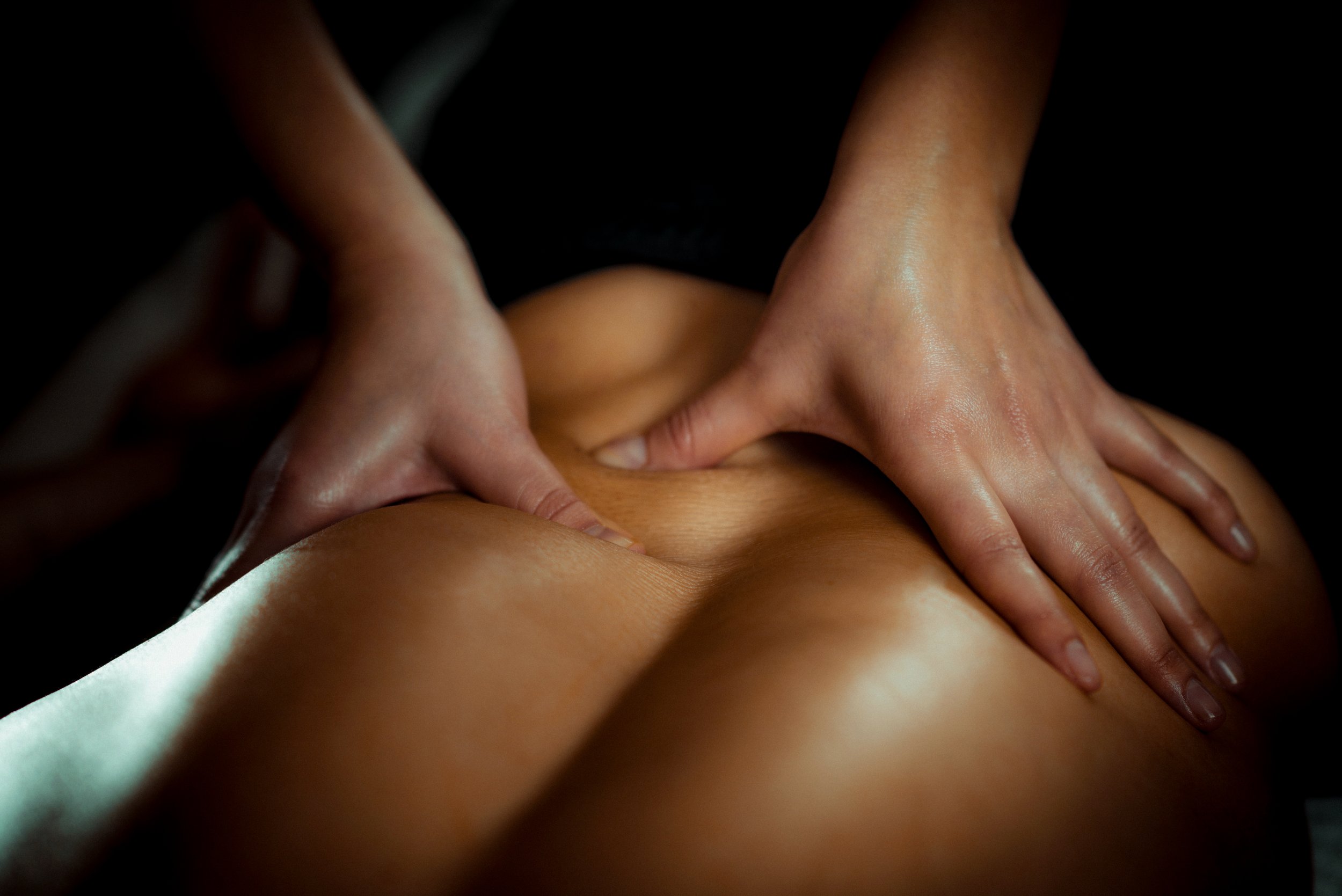
Sports massage therapy is one of the most effective recovery tools available to active people -- whether you train professionally, race on weekends, or simply want to keep your body moving well and stay injury-free. It targets the specific muscles, connective tissues, and movement patterns most stressed by your activity, and it works with your training schedule rather than around it.
At Knead Foot & Body Massage, sports massage is delivered by Registered Massage Therapists (RMTs) licensed under the BC College of Massage Therapists (CMTBC). Every session begins with an assessment of your training load, any current tightness or discomfort, and your goals for the appointment. We then apply the right combination of techniques based on where you are in your training cycle—pre-event preparation, post-workout recovery, or ongoing maintenance. Sessions run from 25 to 120 minutes, with direct billing available for most extended health plans and ICBC claims accepted at both our Vancouver locations.
What Is Sports Massage Therapy?
Sports massage therapy is a form of therapeutic massage that targets the soft tissues most affected by physical training and athletic activity. This includes muscles, tendons, ligaments, and fascia—the connective tissue that wraps and connects them. The clinical goal is to support recovery, reduce the risk of overuse injury, and help the musculoskeletal system adapt to training demands rather than break down under them.
Sports massage is not a harder or more intense version of relaxation massage. It is a distinct clinical modality with its own assessment framework, technique selection, and application timing. Delivered by an RMT, sports massage is covered by most extended health benefit plans in BC -- a meaningful difference from spa-based massage services that are not insurable.
Sports Massage vs. Deep Tissue Massage -- What Is the Difference?
Deep tissue massage and sports massage share many techniques -- both use sustained pressure, trigger point release, and myofascial work. The difference is in clinical purpose and application context. Deep tissue massage focuses on resolving existing dysfunction: breaking down adhesions, releasing chronic tension, and restoring mobility in tissue that has become restricted. It is condition-focused.
Sports massage is training-cycle-focused. The same techniques are applied with different goals: preparing tissue for performance before an event, accelerating metabolite clearance and reducing DOMS after exertion, or maintaining tissue quality and identifying imbalances across a competitive season. A client with chronic neck pain from desk work is a deep-tissue candidate. A client training for a marathon who wants to stay injury-free throughout their build phase is a candidate for sports massage. Many Knead clients use both, depending on what their body needs at a given point in their schedule. Learn more about our deep tissue massage approach.
Sports Massage vs. Relaxation Massage
Relaxation massage -- Swedish or effleurage-based -- uses light to moderate pressure in long, flowing strokes to activate the parasympathetic nervous system, lower cortisol levels, and promote general rest. It is the right choice when the primary goal is stress reduction and recovery from life demands rather than training demands. Sports massage uses techniques selected for their physiological effect on tissue that has been loaded and stressed through training. Pressure, speed, and technique selection vary depending on the phase of training and the tissue being treated. Both are available at Knead and are sometimes used together in a single session.
How Sports Massage Works -- Technique Breakdown
Sports massage is applied differently depending on your timing relative to training and competition. A session has three distinct phases of application, each with its own technique selection and clinical objective.
Pre-Event Massage -- Preparing Your Body to Perform
Pre-event sports massage is applied 15 minutes to 48 hours before a competition or a hard training session. The goal is to increase blood flow, raise muscle temperature, stimulate neuromuscular responsiveness, and reduce any pre-existing tightness that could limit the range of motion or increase injury risk. Techniques are brisk rather than deep—effleurage, tapotement, and light compression dominate. Deep fascial work is avoided pre-event because it can temporarily reduce power output as tissue adapts to the release.
Post-Event Recovery Massage -- Reducing Soreness and Rebuilding
Post-event massage is applied 1 to 24 hours after competition or high-intensity training. The primary targets are metabolite clearance -- helping the body flush lactic acid and other waste products from worked muscle tissue -- and the early management of micro-damage that, if left unaddressed, can accumulate into delayed-onset muscle soreness (DOMS). Research published in the Journal of Strength and Conditioning Research confirms that post-exercise massage significantly reduces the intensity and duration of DOMS. Techniques include slower petrissage, lymphatic-stimulating effleurage, and gentle myofascial work. Your RMT monitors tissue response throughout and adjusts the depth based on how the tissue responds.
Maintenance and In-Season Sports Massage
Maintenance sports massage is applied between training sessions across a competitive season or training block. This is where most injury-prevention work happens. Your RMT assesses tissue quality session by session -- identifying areas of accumulating tightness, developing adhesions, or emerging muscle imbalances before they become injuries. Techniques at this stage include deeper trigger-point work, myofascial release, neuromuscular technique (NMT) for motor pattern correction, and PNF stretching to restore range of motion lost under training load.
Key Techniques Used in Sports Massage
Depending on the phase of your training cycle and presenting tissue condition, your Knead RMT may use a combination of the following:
Trigger point therapy: sustained direct pressure on hyperirritable muscle foci that generate local or referred pain. Trigger points in the glutes, for example, often cause knee and hip pain, leading athletes to treat the symptoms rather than the source.
Myofascial release (MFR): gentle sustained traction applied to the fascial network to release restrictions that have accumulated under repetitive loading patterns. Common targets in athletes: hip flexors, IT band complex, and thoracolumbar fascia.
Neuromuscular technique (NMT): addresses dysfunctional neuromuscular firing patterns that develop under fatigue or following injury. Particularly useful for athletes experiencing recurring muscle pulls in the same location across multiple training cycles.
PNF stretching: proprioceptive neuromuscular facilitation stretching uses alternating contraction and relaxation to access a greater range of motion than passive stretching alone. Effective for hip flexor restriction, hamstring tightness, and shoulder mobility limitations in overhead athletes.
Compression and flushing strokes: rhythmic compression applied perpendicular to muscle fibres to drive blood flow and accelerate metabolite clearance. The primary technique in post-event and recovery-focused sessions.
What Sports and Activities Does Sports Massage Support?
Sports massage is not limited to competitive athletics. Anyone who loads their body through physical training -- whether at the competitive level or for personal fitness -- accumulates the tissue stress that sports massage addresses. Here is how it applies across the most common active populations at Knead:
Sports Massage for Runners and Trail Athletes
Running is one of the highest-volume repetitive-loading activities in Vancouver. The Seawall loop, the North Shore trail network, the Grouse Grind, and the dozens of running clubs across the city generate a consistent pattern of tissue demand: tight hip flexors and TFL, overworked calf and Achilles complex, restricted thoracolumbar fascia, and recurring hamstring strain. Sports massage for runners targets these predictable stress areas, addresses IT band syndrome and plantar fasciitis before they become training-stopping injuries, and supports tissue quality during high-mileage build phases and taper weeks.
Sports Massage for Cyclists and Triathletes
Cycling places sustained load on the quadriceps, hip flexors, glutes, and low back -- and in the aero position, the upper trapezius and cervical spine as well. Vancouver cyclists dealing with road miles, mountain biking on the North Shore, or triathlon training face the additional challenge of multi-sport tissue demands that compound rather than balance each other. Sports massage for cyclists addresses the chronic hip flexor shortening and quadriceps dominance that develop with saddle time, helps manage the shoulder and neck tension of sustained aero position, and supports rapid recovery across back-to-back training days during heavy-volume blocks.
Sports Massage for Gym Athletes and Weightlifters
Resistance training creates significant and often asymmetrical tissue demands. Bench press volume tightens pectorals and shortens the anterior shoulder. Heavy deadlifts load the thoracolumbar fascia and erectors. Overhead pressing accumulates impingement risk in the rotator cuff. Sports massage for gym athletes identifies the specific loading patterns driving these adaptations, releases the tissue holding the imbalance, and helps restore the movement quality that progressive overload depends on. Your Knead RMT will assess which muscles are compensating for which during your training and address the compensation pattern rather than only the symptom.
Sports Massage for Recreational and Non-Competitive Exercisers
You do not need to be training for a race or competing at any level to benefit from sports massage. Anyone who exercises regularly -- yoga, swimming, hiking, recreational sport, group fitness classes -- accumulates tissue load that sports massage addresses. Many Knead clients use sports massage as part of a monthly wellness routine to maintain tissue quality, catch tightness before it becomes an injury, and keep their bodies moving well through the demands of an active lifestyle.
Benefits of Sports Massage Therapy
When delivered consistently and timed correctly within your training cycle, sports massage produces the following measurable outcomes:
Faster recovery between sessions: post-event and recovery massage reduces DOMS intensity and duration, allowing higher training quality in subsequent sessions.
Reduced injury incidence: regular maintenance massage identifies tissue changes -- accumulating tightness, developing adhesions, emerging imbalances -- before they become clinical injuries that force time off training.
Improved range of motion: PNF stretching and myofascial release restore mobility lost under repetitive training loads, improving movement mechanics and reducing injury risk.
Neuromuscular reset: NMT and trigger point work correct dysfunctional motor firing patterns that develop under fatigue, helping muscles fire in the right sequence for your sport.
Better tissue quality over the long term: consistent maintenance massage prevents the accumulation of fascial adhesions and scar tissue that, once established, significantly impair tissue glide and movement quality.
Insurance-covered clinical care: sports massage delivered by a CMTBC-registered RMT is covered by most extended health benefit plans in BC. You receive clinical-grade soft tissue care with the financial support of your benefits plan.
How Often Should You Get a Sports Massage?
Frequency depends on your training load, competitive schedule, and whether you are addressing an existing issue or working preventively:
Competition season, high training load: weekly or bi-weekly sessions to maintain tissue quality and catch accumulating tightness before it limits training.
Build phase, moderate training: bi-weekly sessions timed to recovery days rather than hard training days.
Off-season, low training load: monthly maintenance sessions to address accumulated restrictions from the previous season and prepare tissue quality for the next build.
Pre-event week: a targeted 25-50 minute session 48-72 hours before competition. Avoid deep work in the 24 hours immediately before competing.
Post-event recovery: a recovery-focused session 24-48 hours after a hard race or competition event.
Your Knead RMT will recommend a specific frequency at your initial assessment based on your training schedule, tissue findings, and goals. Knead's membership program -- starting at $59.50 per month -- makes consistent sports massage accessible for athletes maintaining a regular treatment schedule.
Sports Massage at Knead -- What to Expect
Every sports massage session at Knead begins with a brief intake that includes your training schedule, current load, any recent or recurring issues, and your goal for today's session. Your RMT uses this information to select the right technique phase and focus areas before touching the table.
Knead operates two Vancouver studios: Marpole on Granville Street in South Vancouver, and Mount Pleasant on East 15th Avenue in East Vancouver. Both are staffed by trained RMTs, offer the full range of session lengths, and offer direct billing.
Session Lengths and Pricing
25 minutes -- Targeted single-area session: ideal for a specific focus area pre-event or for a quick post-workout flush.
50 minutes -- Standard session covering primary sport-affected areas plus associated structures.
80 minutes -- Extended session for athletes with multiple areas of concern or those in high training volume phases.
110 minutes -- Comprehensive full-body sports massage for recovery weeks or pre-competition tune-ups.
Pricing starts at $47. Members receive discounted rates from $59.50 per month. RMT sessions include detailed receipts for extended health insurance submission.
Direct Billing and Insurance Coverage
Sports massage delivered by a Registered Massage Therapist is covered by most extended health benefit plans in BC. At Knead, we offer direct billing to major insurers, so you pay only your deductible or copay at the time of your visit. ICBC claims are also accepted directly at both locations. Contact our team before your first appointment with any questions about your coverage.
Frequently Asked Questions -- Sports Massage Therapy
Do I need to be an athlete to get a sports massage?
No. Sports massage benefits anyone who exercises regularly, regardless of performance level or competitive status. If you run, cycle, lift, practice yoga, hike, or play recreational sport, your body is accumulating the kind of tissue load that sports massage addresses. Many Knead clients who book sports massage have never competed in any sport.
How is sports massage different from deep tissue massage?
Deep tissue massage is condition-focused: it resolves existing dysfunction, such as chronic tension, adhesions, and restricted mobility. Sports massage is training-cycle-focused: it prepares tissue for performance, accelerates recovery, and maintains tissue quality across a competitive season. They share many techniques but apply them with different clinical goals. Read our deep tissue massage guide for a detailed comparison.
Is sports massage painful?
Sports massage should produce productive discomfort in areas of active restriction -- particularly during trigger-point work or myofascial release of tight tissue. It should not cause sharp or acute pain. Your Knead RMT will check in throughout the session and adjust depth and technique based on your feedback. Pre-event massage is deliberately lighter to avoid the performance impact of deep tissue work before competition.
How often should athletes get sports massage?
During high training load or competition season, weekly or bi-weekly sessions are typical. During lower-intensity build phases, bi-weekly is common. For off-season maintenance, monthly sessions are sufficient. Your RMT will recommend a specific schedule at your first assessment.
Can sports massage help prevent injuries?
Yes. Regular maintenance sports massage identifies accumulating tissue changes -- tightness, adhesions, muscle imbalances -- before they become clinical injuries. This proactive approach is particularly effective for runners managing IT band syndrome risk, cyclists addressing hip flexor restriction, and overhead athletes monitoring rotator cuff tissue quality.
Is sports massage covered by extended health insurance?
Yes, when delivered by a Registered Massage Therapist. Knead's RMTs are licensed under the BC College of Massage Therapists, making all sessions insurable under most extended health benefit plans. We offer direct billing to major BC insurers at both Marpole and Mount Pleasant studios.
Book Your Sports Massage Session
Your body performs better when it recovers well. Sports massage therapy at Knead gives you the clinical support your training actually demands -- assessment-led, technique-specific, and timed to your schedule rather than a generic protocol.
Two Vancouver locations. Sessions are 25 minutes. Direct billing for most extended health plans. ICBC accepted. Pricing from $47, memberships from $59.50 per month. Book your sports massage session online today.