
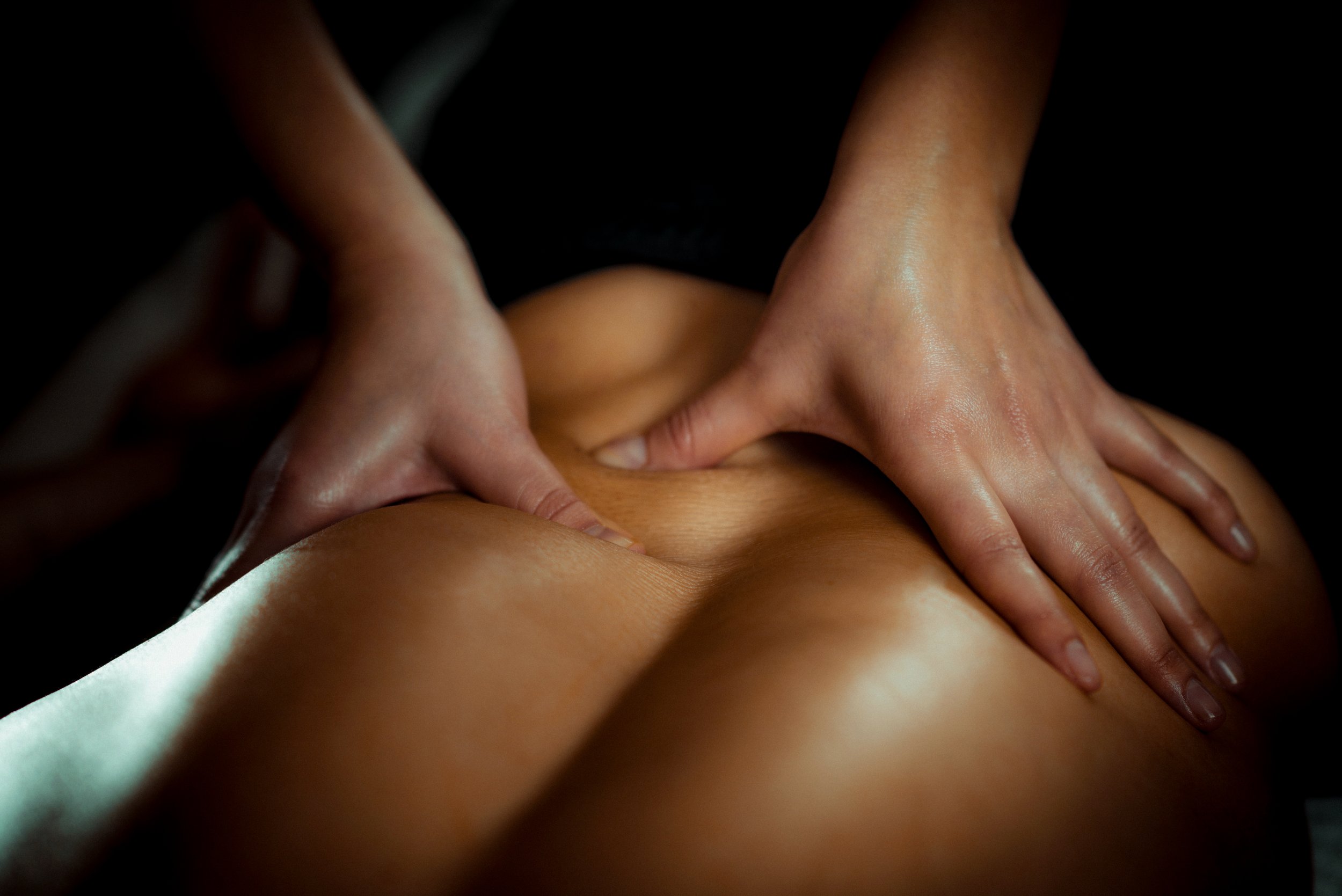
Lymphatic drainage massage is one of the gentlest massage services available -- and for clients experiencing puffiness, post-travel heaviness, post-surgical swelling, or simply a sense of physical congestion that standard massage has not reached, it can be one of the most noticeably effective. It works through light, precise manual technique that encourages the movement of lymph fluid through the body's lymphatic vessels -- supporting circulation, reducing fluid retention, and leaving the body feeling considerably lighter and less congested.
At Knead Foot & Body Massage, lymphatic drainage massage is delivered by Registered Massage Therapists (RMTs) licensed under the BC College of Massage Therapists. This means sessions are insurable under most extended health benefit plans in BC -- a meaningful distinction from the many Vancouver providers offering lymphatic-style massage without RMT credentials. Sessions are available at both our Marpole and Mount Pleasant studios.
What Is Lymphatic Drainage Massage?
Lymphatic drainage massage -- formally known as Manual Lymphatic Drainage (MLD) -- is a specialized massage technique that uses very light, rhythmic, directional strokes to encourage the movement of lymph fluid through the lymphatic system. Unlike deep tissue or relaxation massage, the pressure used in MLD is deliberately minimal: the lymphatic capillaries lie just below the skin surface, and overpressure compresses rather than stimulates them. The work is precise, not forceful.
The goal is to support the body's natural lymphatic circulation—helping fluid move through its vessels and nodes more efficiently, reducing swelling and puffiness, supporting immune function, and creating the subjective sensation of feeling lighter and less congested. It is not the same as a standard relaxation massage, and clients new to this service should expect a very different sensory experience.
Manual Lymphatic Drainage (MLD) - The Formal Name
Manual Lymphatic Drainage is the clinical and technical name for lymphatic drainage massage. The abbreviation MLD is widely used in healthcare settings. In BC, MLD delivered by a Registered Massage Therapist is billed under 'massage therapy' in extended health plans, making it insurable when provided by an RMT. The term 'lymphatic drainage massage' is the consumer-facing name; MLD is the clinical designation that appears on insurance receipts and medical documentation.
The Vodder Technique - How MLD Was Developed
The foundational technique for Manual Lymphatic Drainage was developed in 1936 in France by Dr. Emil Vodder and his wife, Estrid Vodder. Working with clients who had chronic sinus infections and enlarged lymph nodes, Vodder observed that gentle, carefully directed strokes along the lymphatic pathways produced measurable improvement in fluid movement and symptom relief. The technique he developed -- using circular, pumping strokes applied with very light pressure in the direction of lymph flow -- became the basis for the most widely used MLD method in clinical and wellness practice worldwide.
The Dr. Vodder School International maintains the training and certification standards for this technique. Several variations have since been developed (Foldi, Leduc, Casley-Smith), all sharing the same core principles of light pressure, rhythmic application, and directional flow. At Knead, our RMTs apply MLD principles in a wellness-oriented context.
How MLD Differs from Regular Massage - What to Expect
Most clients are surprised by how different lymphatic drainage massage feels from any other massage they have experienced. The pressure is extremely light—no firm touch, not even moderate. Many clients describe the sensation as a slow, gentle wave-like movement across the skin, almost like a feather stroke. There is no kneading, no deep work, no sense of muscle manipulation.
Sessions often begin with a few minutes of diaphragmatic breathing—slow, deep abdominal breaths that open the thoracic duct and the primary lymphatic drainage pathways. The therapist then works sequentially through the body in a specific anatomical order, from the trunk outward, following the direction lymph naturally flows toward the major lymph node clusters. The pacing is deliberate and slow. Many clients find it profoundly calming, even mildly sedative, and notice changes in their sense of puffiness or heaviness within the session itself.
How Lymphatic Drainage Massage Works
To understand why lymphatic drainage massage produces the results it does, it helps to understand what the lymphatic system does and why it occasionally needs support.
The Lymphatic System and Why Fluid Movement Matters
The lymphatic system is a network of vessels, nodes, and organs that runs throughout the body alongside the circulatory system. Its primary functions are to return excess interstitial fluid (fluid that has leaked from blood vessels into surrounding tissue) to the bloodstream, transport immune cells (white blood cells) to where they are needed, and filter waste products through lymph nodes before returning fluid to circulation.
Unlike the cardiovascular system, the lymphatic system has no central pump -- it relies on muscle movement, breathing, and the rhythmic contraction of lymphatic vessel walls to keep fluid moving. When this movement slows -- due to surgery, illness, prolonged inactivity, travel, hormonal changes, or other factors -- fluid can accumulate in tissue, producing the characteristic puffiness, heaviness, and swelling that lymphatic drainage massage is designed to address.
Technique - Light Pressure, Rhythmic Strokes, Directional Flow
Effective lymphatic drainage massage depends on three technical principles working together:
Light pressure: lymphatic capillaries are superficial and fragile. The Vodder technique specifies a pressure light enough to avoid skin redness -- approximately the weight of a coin. Too much pressure compresses the capillaries, impeding rather than stimulating flow.
Rhythmic strokes: the pumping, circular strokes used in MLD (stationary circles, scooping, rotary movements) create a rhythmic stretch-and-release effect on the skin that mimics and accelerates the natural contractile rhythm of the lymphatic vessel walls (lymphangions).
Directional flow: strokes follow the anatomical direction of lymph flow, from distal (extremities) toward proximal (trunk), always working toward the major lymph node clusters and ultimately toward the terminus—the junction of the jugular and subclavian veins at the base of the neck, where lymph re-enters the bloodstream.
A session always begins proximally -- opening the major drainage pathways near the trunk -- before working distally on the extremities. This ensures there is 'room' in the system for fluid to move before it is encouraged to do so.
Benefits of Lymphatic Drainage Massage
Lymphatic drainage massage offers distinct benefits compared to other massage modalities. The following are the most consistently reported outcomes.
Swelling and Fluid Retention Reduction
The most direct and measurable benefit of MLD is its effect on swelling and fluid retention. By encouraging lymph fluid to move through the vessels more efficiently, lymphatic drainage massage helps reduce the accumulation of interstitial fluid in tissues—the underlying cause of puffiness, bloating, and visible swelling. This is the effect that makes it particularly valuable after surgery, after long-haul travel, during hormonal fluctuations, and for clients who carry chronic fluid retention in the face, legs, or abdomen.
Circulation and Immune System Support
The lymphatic system is integral to immune function: lymph fluid carries white blood cells throughout the body and filters pathogens through lymph nodes. Encouraging lymph flow through MLD supports the efficient delivery of immune cells to tissues and the clearance of cellular waste through the lymph node filtration system. This is the basis for the commonly cited immune support benefit of lymphatic drainage massage. The framing should be accurate: MLD supports conditions that promote better immune function -- it does not directly treat illness or replace medical immune interventions.
Recovery Support -- Post-Surgical and Post-Travel
Lymphatic drainage massage is widely recommended after cosmetic surgery (liposuction, abdominoplasty, rhinoplasty, brow and eyelid procedures) and orthopedic surgery because post-surgical swelling is directly caused by disrupted lymphatic drainage. By supporting fluid movement away from the surgical site, MLD can reduce bruising duration, minimize post-operative puffiness, and support a faster, more visible recovery. A PMC-published systematic review confirms that MLD is effective for post-traumatic and post-surgical oedema, with well-documented applications in post-mastectomy care.
For post-travel clients -- particularly those on long-haul flights that cause leg swelling and facial puffiness from fluid redistribution and prolonged inactivity -- a single lymphatic drainage session often produces immediate, noticeable improvement.
Calm and Nervous System Rest
Despite using almost no pressure, lymphatic drainage massage consistently produces a deeply calming effect on the autonomic nervous system. The slow, rhythmic, repetitive nature of the strokes activates the parasympathetic nervous system (rest-and-digest response), and many clients find the treatment mildly sedative. This calming effect is not incidental -- it is a consistent clinical observation in MLD research, as noted in the Physio-pedia clinical review of MLD, which documents its documented effect on reducing psychological stress and promoting relaxation.
Who Is Lymphatic Drainage Massage For?
Lymphatic drainage massage is appropriate for a specific set of client presentations. It is not a substitute for deep tissue or sports massage—it serves a different purpose. Here are the situations where it is most useful.
Clients Managing Swelling and Puffiness
If you regularly notice facial puffiness on waking, leg swelling after long days on your feet, or a general sense of physical heaviness and congestion that does not resolve with standard massage, lymphatic drainage massage may address the underlying pattern. Many clients describe the result as a feeling of physical lightness - as if the body has shed something it was holding.
Post-Surgical Recovery Clients
This is the highest-converting audience segment for lymphatic drainage massage in Vancouver. Clients recovering from cosmetic procedures (liposuction, fat transfer, body contouring, facial surgery) and orthopedic surgeries are commonly referred to lymphatic drainage massage by their surgeons to accelerate the reduction of post-surgical swelling and bruising. A series of sessions in the weeks following surgery -- typically beginning 24 to 48 hours post-procedure with medical clearance, or one to two weeks post-surgery depending on the procedure -- is the standard protocol for post-operative lymphatic support.
If you are recovering from surgery, please confirm with your surgeon or physician before booking. Knead's RMTs will discuss your procedure and recovery timeline during intake to ensure the session is appropriate for your healing stage.
A Note on Clinical Lymphedema -- When to Seek a CLT
Lymphatic drainage massage, as offered by Knead's RMTs, is a wellness and recovery service. It is appropriate for the conditions described above—swelling from surgery, travel, fluid retention, pregnancy, and general circulation support.
If you have been diagnosed with clinical lymphedema -- particularly secondary lymphedema following lymph node removal or damage in cancer treatment (breast cancer, melanoma, other lymph node-involving procedures) -- you need a Certified Lymphedema Therapist (CLT). Clinical lymphedema management requires specialized training beyond standard MLD, specific compression bandaging protocols, and ongoing medical monitoring, all of which fall outside the scope of wellness massage practice.
We are happy to see clients with mild or well-managed lymphedema in a wellness context, and we will discuss your situation during intake. For active or worsening lymphedema, please seek a CLT through Flow Lymphatic Health Clinic or Legacies Health Centre in Vancouver, both of which specialize in clinical lymphedema management.
Lymphatic Drainage Massage vs. Other Massage Modalities
Lymphatic Drainage vs. Deep Tissue Massage
Deep tissue massage and lymphatic drainage massage are at opposite ends of the pressure and intent spectrum. Deep tissue massage applies sustained pressure to the deeper layers of muscle and connective tissue to resolve structural dysfunction, adhesions, and chronic pain. Lymphatic drainage massage uses feather-light strokes that barely reach below the skin surface, working on a completely different anatomical system. There is no overlap in application. If you have a specific muscle pain or structural problem, deep tissue is the appropriate choice. If you have swelling, fluid retention, or need post-surgical support, lymphatic drainage massage is the appropriate choice. Many clients benefit from both at different points in their wellness routine.
Lymphatic Drainage vs. Relaxation Massage
Relaxation massage uses light to moderate pressure in long flowing strokes to calm the nervous system and release surface muscle tension. It is the right choice when the primary goal is stress reduction and general rest. Lymphatic drainage massage is lighter still and more anatomically specific—it targets the lymphatic system rather than the muscular system. While both produce calming effects on the nervous system, their physical goals are different. If you have surface muscle tension and want to decompress, a relaxation massage is more appropriate. If you have puffiness, swelling, or fluid retention, lymphatic drainage massage addresses those conditions directly.
Does Insurance Cover Lymphatic Drainage Massage in BC?
Yes -- when delivered by a Registered Massage Therapist. In BC, Manual Lymphatic Drainage is billed under 'massage therapy' in extended health plans when provided by a CMTBC-registered RMT. Most lymphatic drainage providers in Vancouver -- including many specialized lymphatic studios -- are not staffed by registered RMTs and cannot bill insurance. Because RMTs deliver Knead's sessions, your session is covered by most BC extended health benefit plans.
At Knead, we offer direct billing to major insurers, including Pacific Blue Cross, Sun Life, Manulife, and Green Shield Canada, at both Marpole and Mount Pleasant studios. You pay only your deductible or copay at the time of your visit. All RMT sessions include detailed receipts with the therapist's CMTBC registration number. No physician referral is needed to book in BC, though some plans may require one for reimbursement.
Lymphatic Drainage Massage at Knead -- What to Expect
Your lymphatic drainage session begins with a brief intake. Your RMT will ask about your reason for booking, any recent surgeries or medical conditions, current swelling or areas of concern, and your overall health history. This conversation helps the therapist determine the appropriate focus areas and ensure the session is right for your situation.
You will undress to your comfort level and lie down on the table, as with any massage. The session opens with diaphragmatic breathing and begins with work around the neck and trunk before moving to the extremities. The pressure throughout is very light. Most clients experience a profound sense of calm during the session and notice changes in puffiness or heaviness before it ends. Some clients feel mild fatigue after their first session as the body adjusts to increased fluid circulation -- this is normal and resolves within a few hours.
Session Lengths and Pricing
50 minutes -- Standard lymphatic drainage session. Covers the major lymph node clusters and primary fluid accumulation areas.
80 minutes -- Extended session for clients with multiple areas of concern or post-surgical recovery requiring more thorough coverage.
110 minutes -- Full-body lymphatic drainage—comprehensive sequential treatment from feet to terminus.
Pricing starts at $90. Members receive discounted rates from $59.50 per month. All RMT sessions include receipts for extended health insurance submission. A series of 4 to 10 sessions spaced no more than 10 days apart is commonly recommended for post-surgical recovery and ongoing fluid management.
Frequently Asked Questions -- Lymphatic Drainage Massage
Is lymphatic drainage massage deep?
No. Lymphatic drainage massage uses intentionally very light pressure -- lighter than any other massage modality. The lymphatic capillaries targeted by the technique lie just below the skin surface, and the pressure applied is approximately equivalent to the weight of a coin. Clients expecting a deep or muscular treatment will find it very different. If you want muscle relief, deep tissue massage is the appropriate modality.
What is lymphatic drainage massage used for?
Lymphatic drainage massage is most commonly used for post-surgical swelling and recovery, post-travel puffiness, pregnancy-related fluid retention, general circulation support, and clients who feel physically congested or heavy without a specific muscular complaint. It is also used for mild immune support and as a calming treatment for the nervous system.
Will I feel sore after a lymphatic drainage massage?
Most clients do not experience soreness after a lymphatic drainage massage because the pressure does not work on muscles. Some clients feel mild fatigue after their first session as the body responds to increased fluid circulation -- this typically resolves within a few hours. Staying well hydrated before and after the session supports the process.
Does insurance cover lymphatic drainage massage in BC?
Yes, when delivered by a Registered Massage Therapist. Knead's RMTs are CMTBC-licensed, and lymphatic drainage massage is billed as massage therapy under most BC extended health plans. We offer direct billing to major insurers at both the Marpole and Mount Pleasant Vancouver locations.
How often should I get a lymphatic drainage massage?
For post-surgical recovery, the standard protocol is 4 to 10 sessions spaced no more than 10 days apart, beginning once medical clearance is received. For wellness maintenance and general circulation support, monthly sessions are sufficient for most clients. Your RMT will recommend a schedule at your first appointment based on your presenting condition and goals.
Book Your Lymphatic Drainage Massage Session
If your body feels puffy, congested, heavy after travel or surgery, or simply overdue for a reset that standard massage has not fully reached, lymphatic drainage massage at Knead offers a gentle, precise, and genuinely effective approach -- delivered by Registered Massage Therapists who can bill your extended health benefits directly.
Two Vancouver locations. Sessions are 50 minutes. Pricing from $90. Direct billing for most extended health plans. ICBC accepted. Membership is $59.50 per month. Book your lymphatic drainage massage session online today.